OpenAI Takes GPT-Rosalind Out of Research Preview With Stronger Biology, Genomics and Drug Discovery AI
The September 11, 2026 update moves GPT-Rosalind beyond its earlier research-preview stage and expands access through OpenAI's trusted-access program. The company says the model is designed for scientific workflows involving biology, drug discovery, genomics, medicinal chemistry and translational medicine.
This is an important shift in OpenAI's strategy.
Instead of relying only on general-purpose AI models, the company is increasingly developing specialized systems for professional industries where users need domain-specific reasoning, tools and data.
GPT-Rosalind is one of OpenAI's clearest examples of this approach.
The model is designed to help researchers synthesize scientific evidence, analyze biological information, develop hypotheses and work through multi-step research processes.
OpenAI says eligible organizations can access the model through ChatGPT, Codex and the API under its trusted-access deployment structure.
What Is GPT-Rosalind?
GPT-Rosalind is OpenAI's specialized reasoning model for life sciences research.
The model was originally introduced in April 2026 as a system designed to support research across biology, drug discovery and translational medicine. Its capabilities were optimized around scientific workflows rather than general consumer productivity.
The name Rosalind refers to Rosalind Franklin, whose research played an important role in understanding the structure of DNA.
OpenAI designed the model to work across areas such as:
- Biology
- Medicinal chemistry
- Genomics
- Protein engineering
- Biochemistry
- Experimental planning
- Scientific literature analysis
- Biological data analysis
- Drug discovery
The September update further expands the model's availability and capabilities for real-world scientific organizations.
Why Specialized AI Matters for Scientific Research
General-purpose AI models can answer scientific questions, but professional research often requires much more than generating an explanation.
Scientists may need to combine information from research papers, databases, experimental results, molecular structures, genetic sequences and specialized computational tools.
That creates a complex workflow.
A researcher may need to:
- Find relevant scientific evidence.
- Compare conflicting findings.
- Analyze biological or chemical data.
- Generate possible hypotheses.
- Design an experiment.
- Check the results.
- Search for additional evidence.
- Revise the hypothesis.
GPT-Rosalind is designed to support this kind of multi-step workflow.
OpenAI says the model combines stronger biological reasoning with scientific tool use and can work across literature, databases and research tools.
This makes it different from a standard chatbot that primarily provides answers based on a single conversation.
GPT-Rosalind Gets Stronger Scientific Reasoning
The September update includes improvements across several scientific areas.
OpenAI says GPT-Rosalind performs strongly on tasks involving medicinal chemistry, genomics, quantitative biology and real-world laboratory workflows.
Medicinal Chemistry
Medicinal chemistry is one of the most important areas for pharmaceutical research.
Scientists working in this field need to understand chemical structures, molecular interactions, potential drug candidates and properties that influence whether a compound could become a useful medicine.
OpenAI evaluated GPT-Rosalind on its MedChemBench benchmark.
According to the company, GPT-Rosalind achieved 27.5% compared with 25.1% for GPT-5.5, while using 7.2% fewer tokens on the evaluation.
OpenAI says the evaluation covers areas including:
- Chemical structure understanding
- Structure-activity relationships
- Drug potency
- Toxicity
- ADME properties
- Lead optimization
- Retrosynthesis
These capabilities are particularly relevant to early-stage drug research.
Genomics and Quantitative Biology
GPT-Rosalind is also designed to analyze complex genomic and biological datasets.
OpenAI's GeneBench evaluation measures long-horizon tasks where an AI system must plan an analysis, perform quality control, build models and make corrections before reaching a useful result.
OpenAI reports that GPT-Rosalind achieved 21.6% accuracy compared with 20.4% for GPT-5.5 while using 31% fewer tokens on the benchmark.
The evaluation covers areas including functional genomics, spatial transcriptomics, proteomics, epigenomics and applied genetics.
This is important because scientific AI increasingly needs to handle long analytical workflows rather than isolated questions.
GPT-Rosalind Can Assist With Laboratory Work
Another notable part of the update is OpenAI's evaluation of GPT-Rosalind on real laboratory workflows.
The company introduced LabWorkBench, an evaluation designed to test whether AI can connect experimental changes with observed outcomes in real wet-lab protocols.
GPT-Rosalind scored 63.2% compared with 55.8% for GPT-5.5 on this evaluation, while using 5.3% fewer tokens.
The purpose is not to replace laboratory scientists.
Instead, the model can potentially help researchers troubleshoot experiments, reason about results and determine what additional information might be useful.
This could become particularly valuable as scientific teams increasingly combine computational research with laboratory experimentation.
OpenAI Adds a Life Sciences Research Plugin
GPT-Rosalind is also connected to a new Life Sciences Research plugin for Codex.
OpenAI says the plugin includes more than 50 public multi-omics databases, literature sources and biology tools.
The plugin is designed to provide an orchestration layer for repeatable research workflows.
Examples include:
- Protein structure lookup
- Sequence searches
- Literature review
- Human genetics research
- Functional genomics
- Biochemistry research
- Public dataset discovery
This is one of the most interesting aspects of the announcement.
The AI model provides reasoning, while the plugin connects that reasoning to external scientific resources.
That combination can make an AI system substantially more useful than a model operating only from its internal knowledge.
GPT-Rosalind Can Work Across Multiple Research Steps
Scientific research is rarely a one-question process.
A researcher might start with a question about a protein, search relevant literature, examine genetic information, compare known structures and then analyze experimental evidence.
OpenAI says GPT-Rosalind is built for these longer workflows.
Its system combines reasoning with scientific tool use, allowing researchers to move between evidence, analysis and computational resources.
This reflects a broader change in AI development.
AI systems are increasingly being designed as research agents rather than simple question-and-answer interfaces.
GPT-Rosalind Is Available Through ChatGPT, Codex and API
Eligible organizations can access GPT-Rosalind through multiple OpenAI products.
OpenAI says the model is available through:
- ChatGPT
- Codex
- OpenAI API
Access is controlled through the company's trusted-access deployment structure.
The model is intended primarily for professional research organizations and qualified scientific teams.
OpenAI is not positioning GPT-Rosalind as a general-purpose consumer chatbot.
Instead, access is designed around organizations conducting legitimate scientific research with appropriate governance and security controls.
Trusted Access Is Central to the Release
Because GPT-Rosalind has strong biological and chemical capabilities, OpenAI is applying additional safeguards.
The company says organizations receiving access must meet requirements involving legitimate scientific research, public benefit, governance, safety oversight and controlled access.
This approach is particularly important because advanced AI capabilities in biology can have both beneficial and harmful applications.
OpenAI's deployment model therefore attempts to balance scientific usefulness with access controls.
The company's GPT-Rosalind system card also documents biological and chemical safety evaluations and describes safeguards used for the model's deployment.
Major Research Organizations Are Testing GPT-Rosalind
OpenAI says it is working with organizations including Amgen, Novo Nordisk, Moderna, the Allen Institute, Thermo Fisher Scientific, Oracle Health and Life Sciences, NVIDIA, Benchling and UCSF School of Pharmacy.
These partnerships are intended to explore how specialized AI can fit into real scientific workflows.
For pharmaceutical and biotechnology companies, the potential value is significant.
Drug discovery involves enormous amounts of scientific literature, experimental information and biological data.
AI that can help researchers navigate this information could reduce the time required for some early-stage research activities.
It does not eliminate the need for laboratory validation or expert judgment, but it could make researchers more efficient.
GPT-Rosalind Is Not Just Another AI Chatbot
The most important distinction between GPT-Rosalind and mainstream AI assistants is its specialization.
A general AI assistant might help a user write an email, summarize a document or generate code.
GPT-Rosalind is designed around scientific workflows.
Its purpose is to help researchers reason about:
Molecules → Proteins → Genes → Pathways → Experiments → Evidence
That specialization allows OpenAI to optimize the system for scientific tasks that general-purpose models may not handle as effectively.
It also explains why the model is being deployed through controlled access rather than being immediately offered as a completely unrestricted consumer service.
What GPT-Rosalind Could Mean for Drug Discovery
Drug development can take many years and requires extensive research before a candidate can reach clinical testing.
OpenAI notes that developing a new drug from target discovery to regulatory approval can take roughly 10 to 15 years in the United States.
AI cannot eliminate that process.
However, specialized models could potentially improve parts of the early discovery pipeline.
For example, researchers could use AI to:
- Explore biological hypotheses
- Analyze scientific literature
- Compare molecular information
- Study protein interactions
- Investigate genetic data
- Prioritize research questions
- Assist experimental planning
- Analyze experimental results
The goal is to help scientists reach useful evidence and hypotheses faster.
GPT-Rosalind Shows Where Scientific AI Is Heading
The latest GPT-Rosalind update is part of a larger trend toward domain-specific AI.
The AI industry is moving beyond the idea that one general model should handle every task.
Instead, organizations are developing specialized models for areas such as coding, finance, cybersecurity, science and medicine.
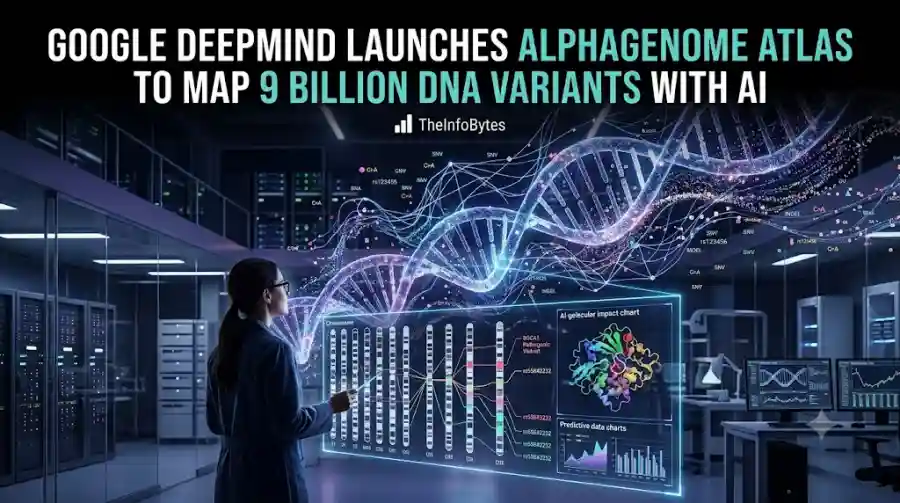
TheInfoBytes has already covered other examples of specialized AI, including Gnani Artha's sovereign AI stack and Google's AlphaGenome Atlas for biological research.
GPT-Rosalind takes that specialization further by combining a reasoning model with scientific tools and research databases.
What Developers and Researchers Should Know
GPT-Rosalind is not currently positioned as a general-purpose API for building unrestricted commercial consumer applications.
OpenAI's help documentation says API access is available to eligible organizations for approved internal research tools, workflows and applications, while customer-facing external commercial applications are not currently supported.
That limitation reflects the model's trusted-access strategy.
Organizations interested in using the system need to go through OpenAI's access and qualification process.
For approved research teams, however, the combination of model reasoning, Codex, scientific tools and external databases could provide a powerful research environment.
The Bigger AI Industry Shift
GPT-Rosalind's expansion is significant because it shows that frontier AI development is increasingly moving into specialized professional environments.
The next generation of AI systems may not simply compete on general benchmarks.
They may compete on how well they perform complete workflows in specific industries.
For life sciences, that means understanding scientific evidence, working with biological data, using specialized tools and helping researchers make better-informed decisions.
GPT-Rosalind is designed around exactly that idea.
OpenAI's September expansion therefore represents more than an access update.
It signals a push toward AI systems built as research partners for specialized scientific work.
As these systems become more capable and better connected to scientific databases and tools, they could become an increasingly important part of computational biology and early-stage drug discovery.
Human scientists will remain responsible for validating evidence, designing experiments and making critical research decisions.
But AI could increasingly handle the repetitive, data-heavy and multi-step analytical work surrounding those decisions.
Frequently Asked Questions
What is GPT-Rosalind?
GPT-Rosalind is OpenAI's specialized AI model designed for life sciences research, including biology, drug discovery, genomics, medicinal chemistry and translational medicine.
What is new about GPT-Rosalind in September 2026?
OpenAI says GPT-Rosalind is moving out of research preview and becoming available globally to eligible organizations through its trusted-access program. The company has also expanded its scientific workflows and plugin capabilities.